
Sex Offender Checks in Malheur County
Oregon divides registry work between state and local offices. The Oregon Sex Offender Online Search is the first public search channel. Oregon State Police runs it and publishes the records that state law authorizes for broad online notice. The Malheur County Sheriff's Office and Community Corrections conduct local registration work in Vale and expose a local Level 3 list. Those channels serve different needs. Use the state tool to search its public set by person or place. Contact the local office when a specific Malheur County area or registration issue needs more direct review.
Gather the person's correct spelling, any known aliases, and a relevant address before searching. Compare more than a name. A photo, physical description, location, conviction information, and classification can help distinguish people who share similar names. For a place-based safety question, start with the address or map view and read the conditions of use. Do not assume the first result is the right person.
Malheur County Registry Search Limits
Oregon's online search is not a roster of every person who must register. ORS 163A.215 requires public web publication for Level 3 registrants. Levels 1 and 2 usually receive narrower forms of notice. A supervising or notifying agency may still provide information that is needed for public protection about a named person or an area, but that does not make every record part of the statewide public website.
This limit changes how a no-result screen should be read. It means only that the search did not return a listing from the public online set under the terms and inputs used. It cannot establish that the person has never registered, has no current duty, or lives outside Malheur County. When a concrete safety concern remains, call the sheriff at 541-473-5126 or ask Oregon State Police which official channel fits the request. Give enough detail to identify the person or area without demanding a custom list that law does not require.
How to Search the Oregon Sex Offender Online Search
The public application uses a CAPTCHA and conditions-of-use gate. It offers search, map, resources, frequently asked questions, and contact routes. Exact controls can change, so follow the current screen instead of expecting a fixed radius menu. The verified search concepts are a name and an address or location.
- Open the official Oregon search, review its conditions, and complete the required CAPTCHA.
- Choose the name search or the geographic search that best fits the safety question.
- Enter the known name or location, then compare each result with known facts.
- Open the individual profile and review its classification, conviction, location, and restrictions together.
| Control | Type | Required | Use |
|---|---|---|---|
| Search or map | Tabs or views | No | Switches between person and place-based review. |
| Name | Text | No | Locates a public Level 3 listing by known identity. |
| Address or location | Text or map | No | Supports a geographic search; confirm current map controls. |
| Subscription | Action | No | Follows changes to one individual listing. |
| CAPTCHA and conditions | Gate | Yes | Must be completed before public access. |
Malheur County Level 3 List
The sheriff's local Level 3 list complements the state search. It does not erase the state tool's limits or turn the local office into a full public directory of Levels 1 and 2. The office responsible for registration is the Malheur County Sheriff's Office and Community Corrections at 151 B Street West, Vale, OR 97918. Call 541-473-5126 to confirm an appointment and current hours before making the trip.
The Oregon State Police Sex Offender Registration program page provides the state program context behind these local duties.
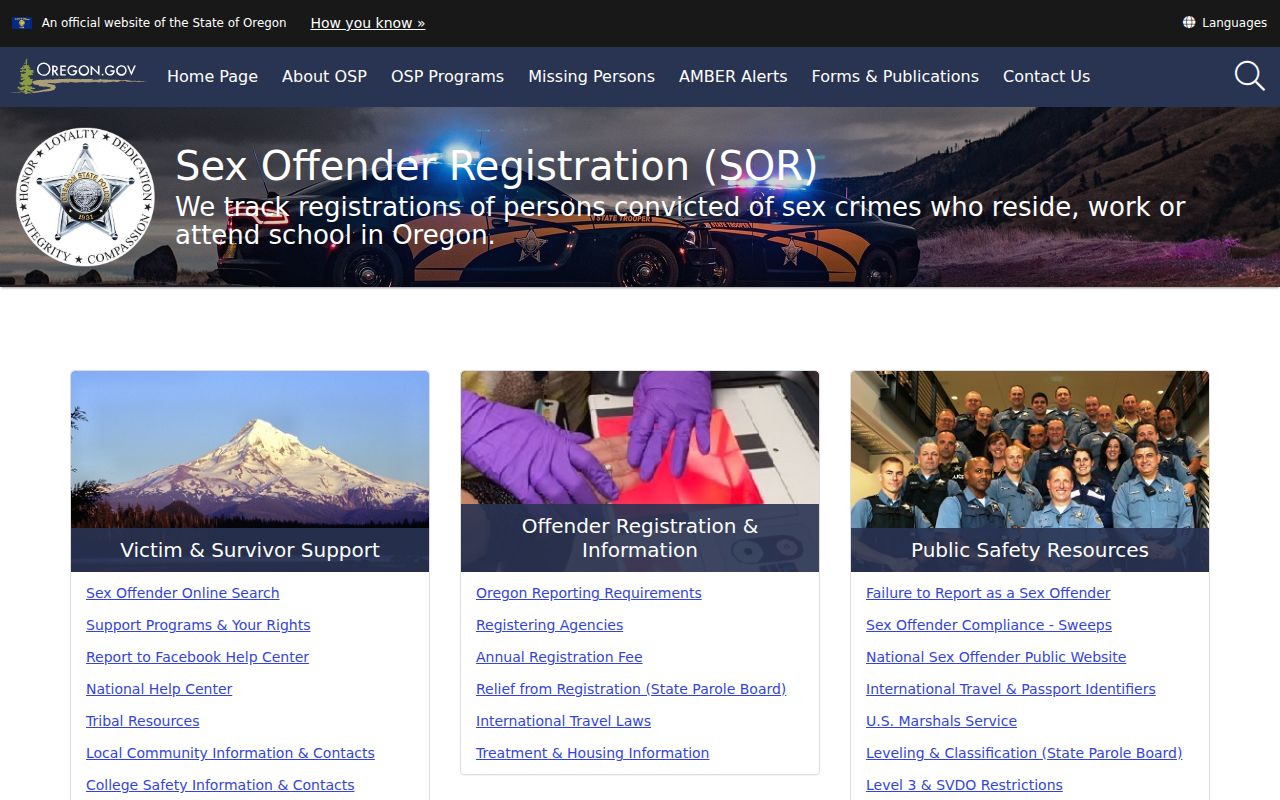
The program page is useful when the issue concerns Oregon registration rules, state contacts, or reporting noncompliance rather than one public profile. The OSP Sex Offender Registration Section is at 3565 Trelstad Avenue SE, Salem, OR 97317. It may be reached at 503-934-1258 or askSOR@osp.oregon.gov, Monday through Friday from 8 a.m. to 5 p.m.
Inside a Malheur County Registry Profile
ORS 163A.215 authorizes a defined group of public profile categories. Read the fields as a current notice record, not as a new finding of guilt. The conviction information refers to the underlying case. The risk classification describes notification and assessed risk. Conditions or restrictions may add context. Fields such as vehicles, workplaces, schools, victim ages, scars, or tattoos should not be assumed unless the live profile actually displays them.
| Name and aliases | Published identity information and alternate names authorized for the listing. |
|---|---|
| Photo and description | A photograph and physical traits used to help confirm identity. |
| Address or location | The location information Oregon law authorizes for public notice. |
| Conviction | Qualifying conviction information tied to the registration record. |
| Classification | The Oregon risk level, which controls the breadth of notice. |
| Restrictions or conditions | Published limits or conditions that apply to the listed person. |
Match several fields before acting on a result. Names can be shared, photos can age, and location information can change. For a certified conviction record, use the court that entered judgment. The registry serves public notice and safety awareness; it is not a certified court case file.
Malheur County Cross-Border Offender Search
Malheur County sits along Oregon's Idaho border, and daily life around Ontario and the Snake River often crosses a state line. Oregon's search covers Oregon's public listings. It is not a substitute for reviewing a neighboring state's registry when the relevant home, school route, family visit, or community activity lies outside Oregon.
The official National Sex Offender Public Website provides the federal cross-jurisdiction search layer for participating registries.
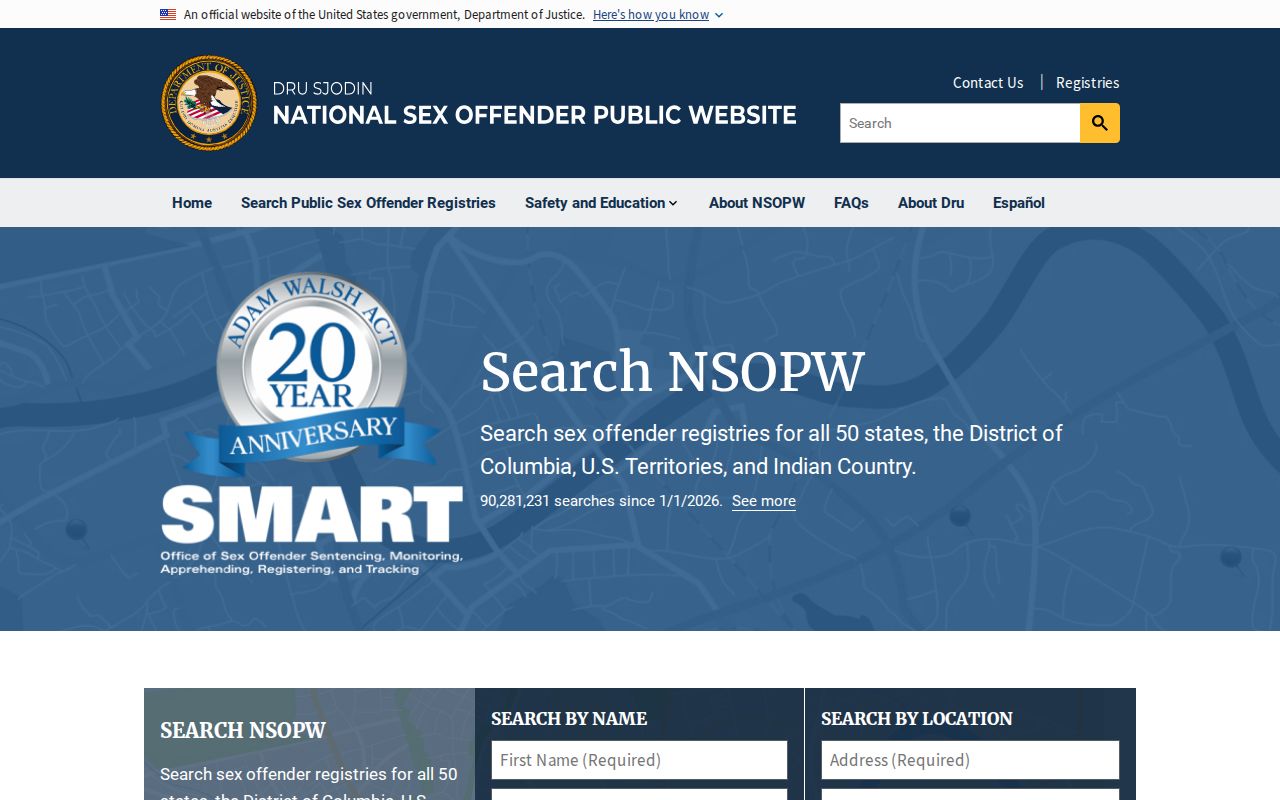
NSOPW helps widen a place or name search across participating jurisdictions, but each source registry still controls its records and disclosure rules. Confirm a result on the jurisdiction's official profile. If an Oregon entry and an Idaho entry appear to conflict, contact the agency that maintains the record rather than choosing the more alarming version.
Oregon Registration Levels and Requirements
Oregon uses risk levels, not the federal tier labels often seen in broad summaries. That distinction matters. Level affects who receives notice and whether a public web listing is required. Registration generally continues unless relief is granted. It should not be reduced to a generic 10-year, 25-year, or lifetime chart drawn from federal SORNA tiers.
| Oregon level | General notification | Relief timing under ORS 163A.125 |
|---|---|---|
| Level 1 | Lowest assessed risk; limited notice to people residing with the registrant and as authorized. | An eligible person may petition no sooner than five years after supervision ends or discharge. |
| Level 2 | Moderate risk; notice may reach significant relationships, neighbors, and places potential victims frequent. | Reclassification to Level 1 may be sought no sooner than ten years; further relief rules then apply. |
| Level 3 | Highest risk; broad notice, an OSP web listing, and possible local or regional media notice. | Relief is not available under that section. |
Certain offenses under ORS 163A.115 and sexually violent dangerous offender status prevent relief. Eligibility is fact-specific. A petition gate is only the first date a qualified person may ask; it is not an automatic end date or a promise that relief will be granted.
Malheur County Registration Deadlines
Registration begins in person. Oregon also requires annual reporting within ten days of a registrant's birthday. Changes to a residence, legal name, work, or education generally must be reported within ten days. International travel carries an earlier rule: it must be reported at least 21 days before departure. These duties explain why the local office matters even though OSP runs the public website.
A missed duty can raise a compliance issue, but members of the public should not investigate or confront someone. Report suspected noncompliance to local law enforcement or OSP. Use 911 only for an emergency. For a non-emergency Malheur County concern, provide the person's known identity, the observed fact, the date, and the location. Let trained staff decide whether the information reflects a violation, a lag in public data, or no issue at all.
Follow a Malheur County Listing
Oregon's application includes a subscription action tied to an individual listing. It can help a person follow changes to that one public profile. The research does not confirm a radius-alert service, so the feature should not be described as automatic notice for every registrant near an address.
Open the correct profile, verify it through the listed identity fields, and use the subscription control shown there. Keep the scope clear. An email about one listing does not replace a later place-based search, and it does not provide notice about people whose records are not part of the public Level 3 web set.
Community Notification and Lawful Use
Registry information exists for awareness and safety planning. Families may use it to understand a public notice, review a route, or discuss sound safety steps. Neighbors may use it to confirm an official listing. A classification is not a new criminal conviction, and registry data does not authorize a private person to punish anyone. Questions about restrictions should go to the supervising or registering agency.
Use registry information lawfully: Never threaten, harass, intimidate, stalk, discriminate against, or take vigilante action against a registrant or household. Oregon's registry notice under ORS 163A.215 is provided for public protection, not retaliation.
Keep the same restraint when sharing a result. Link to the official profile, avoid adding claims the record does not make, and check that the listing still matches the person and place. If immediate danger exists, call 911. Suspected registration noncompliance belongs with MCSO or OSP, not social media or direct confrontation.